
Search for on  
Tuesday, February 09, 2010
     
 Home
 About CWA
 Join CWA
 Give/Donate
- Donate Now
- More Ways to Give
 Get Involved
- Federal
- State/Local
 Media Center
 Legislation
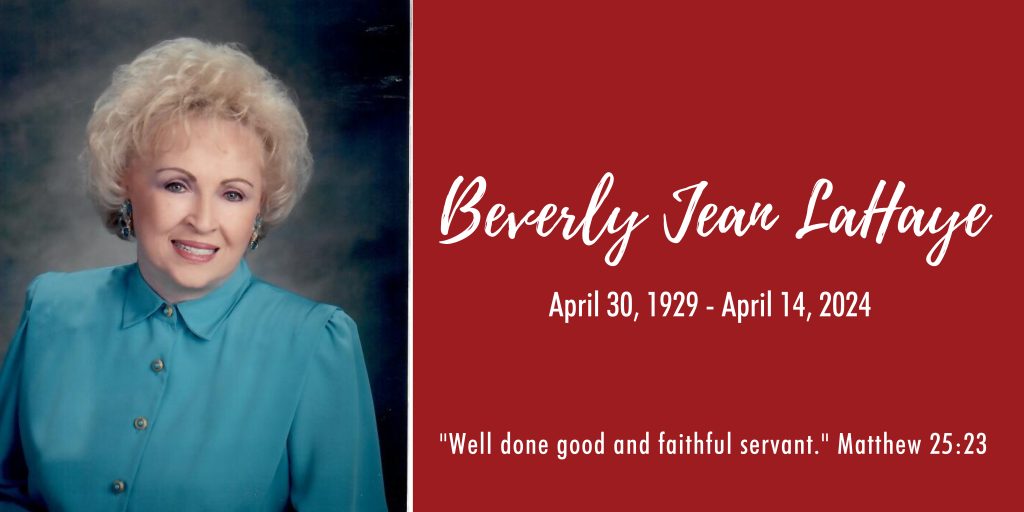
 Beverly LaHaye
 Institute
 Culture and Family Issues
 Legal Studies
 Family Voice
- Subscribe Online!
 Multimedia
 Shop CWA
 CWALAC
 Project 535
 Employment
 Internships
 Brochures
 Fact Cards
 Recently on CWA
 Links


Click here
 

Dr. King, Roe v. Wade and Margaret Sanger     1/21/2002
By Tanya L. Green

A twisted thread of irony is woven between two events commemorated this month. January 21 is the observance of the 73rd birthday of slain Civil Rights leader Dr. Martin Luther King Jr., and the following day marks the 29th anniversary of the landmark abortion decision Roe v. Wade. Every year, in the same place as Dr. King’s historic March on Washington, people gather in Washington, D.C., to protest Roe. For a black woman like myself, the two events could not be more opposite in the freedoms gained and rights lost.

Few are aware that in May 1966, Dr. King was among the first recipients of Planned Parenthood Federation of America’s Margaret Sanger Award, for what Planned Parenthood calls on its Web site the “connection” between King’s crusade for social equality and Sanger’s birth control movement. In the context of his acceptance speech, delivered by his wife Coretta Scott King, he said there was a “striking kinship between our movement and Margaret Sanger’s early efforts.”

Was Dr. King misled when he likened the struggle for equal protection and simple human dignity under the law to a campaign that resulted in denying fundamental human rights to unborn babies?

Planned Parenthood founder Margaret Sanger formed the organization to implement the eugenic ideology that prevailed in the early 20th century. The eugenicists with whom she aligned herself espoused belief, as Sanger put it, in the “supremacy” and “purity” of certain races of people, notably the Aryan race. They believed the “fit” should be encouraged to reproduce, while the “unfit” should constrain their numbers. The “unfit” were the poor, racial minorities and certain groups of immigrants, and the physically and mentally handicapped. They sought to accomplish this through sterilization, birth control and, eventually, abortion.

In its early days, Planned Parenthood’s international work was housed in the offices of the Eugenic Society. Sanger’s publication, “The Birth Control Review” (founded in 1917) regularly featured pro-eugenic articles. Eugenicists financed Planned Parenthood’s early projects, such as the opening of birth control clinics and publication of pro-birth control literature, and constituted most of the organization’s board members.

Planned Parenthood denies that Sanger was a racist or an eugenicist, but there’s truth to the adage that we are known by the company we keep.

Particularly insidious is the obscure 1939 Negro Project created by Sanger and Planned Parenthood (then called the Birth Control Federation of America). They designed two southern rural Negro Project “demonstration programs” to show how birth control “could improve the general welfare of Negroes” through maternal and infant death reductions and child spacing. But some blacks saw this as an extermination plot.

Sanger’s own words, in a letter to a colleague, give credence to this view: “We do not want word to go out that we want to exterminate the Negro population, and the minister is the man who can straighten out that idea if it ever occurs to any of their more rebellious members.”

She succeeded in convincing many black leaders, including ministers, of birth control’s “family planning” benefits. Eventually, these same “benefits,” and more, would segue into the justification of abortion. So it is unsurprising that although blacks comprise a mere 12 percent of the population, black women account for 36 percent of all abortions performed (according to the Centers for Disease Control’s December 2000 report). Or that a disproportionate number of “family planning” clinics are located in urban areas largely populated by low-income blacks and other minorities.

“I truly believe [Dr. King] was not aware of the duplicity of Planned Parenthood’s agenda,” King’s niece Alveda King-Tookes told me. She buttresses this with a direct quote from him: “The Negro cannot win … if he is willing to sell the future of his children for his personal and immediate comfort and safety.”

King-Tookes said her uncle’s words do not align themselves with the condoning of abortion. “Abortion is a violent act, and the unborn are the victims,” she said.

Denial of the most basic human right—the right to live—is the premise for abortion. Sadly, some today have been led to include a “right” to an abortion with traditional civil rights. The irony is that while Dr. King heroically struggled to win equality for blacks, another movement was working subversively to reduce the number of black children born. What better way to limit the “Negro problem” than by decreasing the number of “Negroes” … and by convincing leaders in the black community to endorse it.


Bookmark and Share

Printer Friendly Version

Recent Articles
CWA Calls Out NOW for its Bizarre Attack on Super Bowl Ad
The Aftermath of Abortion
There Was a Heartbeat
March For Life, Abortion in Obamacare, Tiller Murder Trial
Abortion and Recovery: Two Women's Stories
Bella Hero: A Powerful Movie Lives On
Congressman Trent Franks Remembering the Unborn on the 36th Anniversary of Roe vs. Wade
Abortion Changes You … and Those You Love


Concerned Women for America
1015 Fifteenth St. N.W., Suite 1100
Washington, D.C. 20005
Phone: (202) 488-7000
Fax: (202) 488-0806

Feedback / Questions? || Problem with this page? || Archives


    ..... ..... ..... ..... ..... ..... ..... ..... ..... ..... ..... ..... ..... ..... ..... ..... ..... ..... ..... ..... ..... ..... ..... ..... ..... ..... ..... ..... ..... ..... ..... ..... ..... ..... ..... ..... ..... ..... ..... .....