
Search for on  
Tuesday, February 09, 2010
     
 Home
 About CWA
 Join CWA
 Give/Donate
- Donate Now
- More Ways to Give
 Get Involved
- Federal
- State/Local
 Media Center
 Legislation
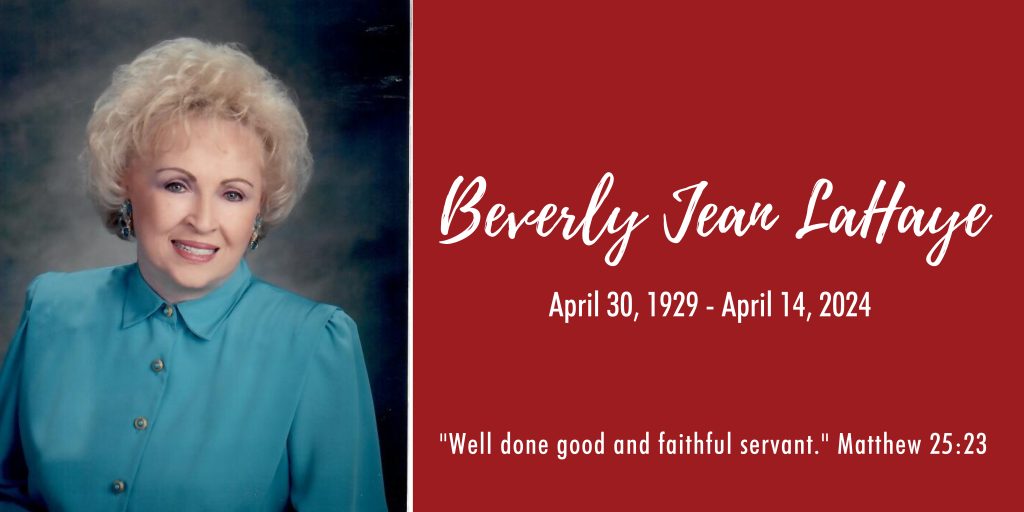
 Beverly LaHaye
 Institute
 Culture and Family Issues
 Legal Studies
 Family Voice
- Subscribe Online!
 Multimedia
 Shop CWA
 CWALAC
 Project 535
 Employment
 Internships
 Brochures
 Fact Cards
 Recently on CWA
 Links


Click here
 

Life, Lies and Hard Cases     1/18/2003
Countering pro-abortion arguments with truth.

Countering pro-abortion arguments with truth.

Since the U.S. Supreme Court handed down its 1973 Roe v. Wade decision, abortion supporters have refined their ability to distract from the truth. From the beginning, ideological spin doctors created arguments of fact and fiction to fuel the fiery conflict. How much of today’s abortion rhetoric is rooted in fact, and how much in fiction?

Defining Life

For years the crux of the abortion debate centered on the question of life’s beginning. In the early years of the Roe era, abortion advocates had an easier time portraying the unborn child as nothing more than a glob of tissue. But advances in ultrasound technology opened a window to the womb, shattering this myth as mothers viewed their developing baby at early stages in pregnancy. In fact, it was this very same ultrasound technology that persuaded Dr. Bernard Nathanson, former abortionist and founder of National Association for Repeal of Abortion Laws—now known as National Abortion and Reproductive Rights Action League Pro-Choice America (NARAL Pro-Choice America), to become pro-life. Dr. Nathanson says that ultrasound and fetal heart monitoring led him to acknowledge that the fetus was “a member of the human community.”

WHEN DOES LIFE BEGIN?

“If we don’t know, then shouldn’t we opt on the side that is life? If you came upon an immobile body and you yourself could not determine whether it was dead or alive, I think that you would decide to consider it alive until someone could prove it was dead. You wouldn’t get a shovel and start covering it up. And I think we should do the same thing with regard to abortion.”

President Ronald Reagan

Technology also allowed color photographs to be taken of the growing child—pictures so clear that viewers could count the fingers on the tiny hand. Such technology removed all doubt that the unborn child is indeed human life.

Still abortion advocates insisted that a fetus is only a part of the mother’s body. And a woman has the right to do what she wishes with her own body. But even if we accept this misguided line of reasoning, modern technology forces us to acknowledge truth.

Justice Sandra Day O’Connor, referring to Roe v. Wade, remarked that the Supreme Court’s decision on abortion put it “on a collision course with itself.” She realized that high-tech medicine “continues to improve the chance for immature fetuses to survive outside the womb. That strengthens the appeal of arguments that … abortions are the taking of viable life.”

Moreover, viability is not an intellectually honest test for life. Biology considers the fertilized egg of any animal as a living organism distinct from its mother. The embryo is an entirely separate life with its own heartbeat and DNA, not merely a part of a woman’s body. Additionally, arguing that if the fetus cannot survive on his own, then he is not human, is faulty. Applying that same argument to a person dependent on any outside source for survival—for example, kidney dialysis—is absurd.

“From molecular genetics to comparative reproduction, nature has taught us that

form [the unborn child], from its very beginning—the ‘thing’ we started with—is a member of our kin,” argues the late Dr. Jerome Lejeune, professor of Fundamental Genetics at the Universite Rene Descartes in Paris. “Being its own, human by its nature, never a tumor, never an amoebae, fish or quadruped, it is the same human being from fecundation [conception] to death.” Clearly, there is no scientific basis for abortion advocates’ claim that life begins only when it can survive outside the womb. In fact, entire fields of science and research—such as genetics and reproductive technology—thrive precisely because life begins at conception. Therefore, an unborn child should be legally protected from the point of conception.

Medical science clearly shows that life begins at conception.

Consider the following:

· At 18 days of gestation, the baby’s heart begins occasional pulsation.

· At 20 days, the foundation for the entire nervous system exists.

· At 21 days, the heart begins to beat regularly and pumps through the circulatory system.

· At 30 days, the eyes, ears, mouth, kidneys and liver exist.

· At 42 days, brain waves are reliably present and reflexes exist.

· At 45 days, teeth buds are present; skeleton is complete; movement begins.

· At 56 days, all body systems are present; he reacts to pain.

· At 9-10 weeks, he squints, retracts his tongue, and will bend his fingers around an object.

· At 11-12 weeks, all body systems work; his arms and legs move; he swallows, sucks thumb, inhales and exhales amniotic fluid, and has fingernails.

· At 14 weeks, the auditory sense is present.

· At 16 weeks, eyelashes are present; he can grasp, swim, kick and turn.

· At 18 weeks, his vocal cords work; he can cry.

· At 20 weeks, hair appears; he weighs about one pound and is about 12 inches long.

A History of Lies

Roe v. Wade, which gave America abortion-on-demand, was a decision built on a foundation of lies. Norma McCorvey was “Jane Roe”—the plaintiff who, under the direction of

the abortion lobby, claimed that she had been a victim of gang rape. She has since admitted that this was an outright lie. Nevertheless, the ruling stands.

Now a pro-life activist, Norma McCorvey says, “I was the most willing dupe [of abortion advocates].” Testifying before a Senate panel, she confessed, “I think it’s safe to say that the entire abortion industry is based on a lie … I am dedicated to spending the rest of my life undoing the law that bears my name … I had to face up to the awful reality. Abortion was not about ‘products of conception’ [or] ‘missed periods.’ It was about children being killed in their mothers’ wombs. All those years, I was wrong.”

While Roe v. Wade is the most widely known abortion case in America, the U.S. Supreme Court issued another crucial ruling as a companion case to Roe, which further defined the terms of abortion in America. The second case is known as Doe v. Bolton. Sandra Cano was the plaintiff “Doe” in this case. Today, she testifies of how she was exploited at the hands of abortion advocates.

“I was poor, pregnant, uneducated, seeking assistance and getting a divorce from a man who was a convicted child molester. My only source of help was Atlanta Legal Aid. Instead of the help I sought, a feminist attorney turned my circumstances into a tool to achieve her agenda—legalizing abortion,” Cano said, speaking at a pro-life march. “For over 20 years now, my name has been synonymous with abortion. I was against abortion then. I am against abortion now. I never sought an abortion. I have never had an abortion. Abortion is murder.”

Not only were the foundational court cases a fraud, the abortion lobby’s fundamental arguments for abortion rights were a farce from the beginning. Abortion advocates found that they could win popular support as well as judicial sympathy by focusing on the horrors of illegal “back-alley” abortions. They argued that countless women were dying at the hands of “back-alley butchers” who exploited desperate women in crisis pregnancies, and they found that exaggerating the statistics would further their cause.

In Aborting America, Dr. Bernard Nathanson admits:

In NARAL, we generally emphasized the drama of the individual case, not the mass statistics, but when we spoke of the latter, it was always “5,000 to 10,000 deaths a year.” I confess that I knew the figures were totally false, and I suppose that the others did too if they stopped to think of it. But in the “morality” of our revolution, it was a useful figure, widely accepted, so why go out of our way to correct it with honest statistics?

The U.S. Centers for Disease Control (CDC) reports only 39 deaths as a result of abortion in 1972. Nathanson believes that the actual total, allowing for under-reporting, was no more than 500. While any death is a tragedy, the estimated 500 is a far cry from the so-called “epidemic” of deaths from back-alley abortions that fueled America’s acceptance of the procedure.

Moreover, by granting abortion its stamp of approval, the Court did not suddenly make the practice a carefree exercise of feminist rights. Abortion is still not safe. Women who have received legal abortions have ended up physically damaged and sometimes dead because the political atmosphere in our nation has made the industry a very lucrative and largely unregulated enterprise—a dangerous combination for American women.

Dr. Slava V. Gaufberg, research director at Harvard University Medical School, noted that the rate of complications in second-trimester abortions is “up to 50 percent and higher.” But tracking those complications is tricky.

One problem that skews statistics on abortion complications is that paperwork reflects only complications occurring at the time of the abortion.

In an effort to gather accurate statistics on abortion complications in Virginia, state Delegate Robert Marshall (R-Manassas) surveyed 1,087 obstetricians and emergency room physicians in 1990. Only 75 responded. But even this low response rate documented 230 abortion complications in Virginia in 1989. More than half (127) were reported 24 hours or more after the abortion. In these instances, the abortion doctor didn’t report an immediate complication. But an emergency room physician or personal doctor was left to try to fix the problem—circumstances in which the complications aren’t reported as abortion-related.

And women today still die from the procedure. The CDC states that in 1997, seven women reportedly died as the result of abortion. But the CDC admits that, due to under-reporting, its calculations are likely low.

Other facts bear this out. Between 1981 and 1984, the CDC reports 42 women died from abortion. However, former Commissioner of Health for New York City, Dr. Stephen Joseph, stated in a 1987 memo to doctors that during that same period 176 women died as the result of abortion in the United States—30 in New York alone.

And poor women often become vulnerable prey to abortionists out to make a buck. Clinics that cater to the poor are particularly prone to bad conditions, because the poor and minorities are least likely to report problems, admits Dr. Albert Brown, an abortionist who was once reprimanded for an incomplete abortion. “[Latino women] are some of the best patients,” he told The Los Angeles Times. “They come in and they don’t complain. Sometimes they are given abortions when they are not even pregnant … It’s an unregulated industry.”

Abortion advocates have tried to make abortion acceptable by misrepresenting those who oppose abortion. For example, the National Abortion Federation (NAF) advertisement says, “Women who’ve had an abortion endure all kinds of name calling, much of which is unprintable here. But the belief that there’s a certain ‘type’ of woman who chooses abortion is as outdated as it is ignorant.” The fact is pro-life individuals do not condemn women in crisis pregnancies or those who have endured abortion. Sympathizing with their difficult situation, pro-lifers support medical innovation and ministries that aid women in crisis pregnancies. And they show compassion toward post-abortive women. For example, Sydna Massé, founder of the post-abortion ministry Ramah International, uses her own abortion experience to reach out to women in need.

Abortion advocates manipulate opinion polls to feign majority support for abortion-on-demand. “If a question about abortion contains the phrase ‘terminate pregnancy’ or ‘women’s right to …’ or the words ‘doctor, choice, the embryo, the fetus,’ the answer of the majority will be pro-abortion. If the question uses the words ‘abortion for social or economic reasons’ or ‘the unborn or pre-born baby,’ ‘his or her’ (rather than ‘its’), ‘abortionist,’ … the answer of the majority will be pro-life.”

“The Supreme Court brought great discredit on itself by overturning state laws regulating abortion without any persuasive basis in constitutional text or logic. And to make matters worse, it committed these grave errors in the service of an extreme vision of abortion rights that the vast majority of Americans rightly consider unjust and immoral.”

Michael McConnell, professor of constitutional law, University of Utah.

Moreover, while NAF insists that by age 45, nearly half (43 percent) of American women will have had an abortion —attempting to portray the procedure as a normal occurrence—abortion declined significantly in the 1990s. Former Education Secretary William Bennett, co-director of Empower America, stated in the 1999 Index of Leading Cultural Indicators that “there were at least 208,000 fewer abortions per year toward the end of the decade than at the beginning.” Even the liberal Center for Gender Equality found that 70 percent of women favor more restrictions on abortion, including 40 percent who believe it should only be allowed in cases of rape, incest or to save the mother’s life.

Abortion advocates, however, continue to spin fiction to advance their agenda. This trend of exaggeration and deceit shows up in debates over partial-birth abortion. Advocates have claimed that partial-birth abortions are performed only when the baby’s or the mother’s life is at risk. Actually 80 percent of these babies are normal; most are viable; and “only 9.4 percent of late-term abortions are to protect the woman’s life or because of fetal defects.” In fact, Ron Fitzsimmons, executive director of the National Coalition of Abortion Providers, admitted that he “lied through his teeth” when he falsely claimed the procedure was uncommon and used only in the most extreme situations. He admitted that partial-birth abortion is almost always performed on healthy mothers with healthy babies.

Outright deceit is interwoven into the abortion lobby’s rhetoric; the depth and magnitude are staggering. But perhaps the most tragic lie is that a woman facing an unplanned pregnancy has no alternative to abortion. Abortion proponents are not eager to mention that life can indeed be a beautiful choice. Children bless their parents’ lives, and adoption gives children to the childless and a loving home to a very wanted child.

Constitutionally Illegitimate

Feminists often tout rhetoric about a woman’s “constitutional right” to abortion. But is Roe v. Wade consistent with the U.S. Constitution?

Constitutional scholars—including those who are pro-abortion—have a hard time taking Roe v. Wade seriously. Abortion supporter John Hart Ely, former dean of Stanford Law School, admits that the Roe decision “is not constitutional law.”

The Court reasoned: A “right to privacy” exists in the Constitution, therefore, this right is broad enough to “encompass a woman’s decision whether or not to terminate her pregnancy.” But nowhere does the Constitution mention a “right to privacy.” Rather, those who wish to advance the pro-abortion agenda have extrapolated the concept from unrelated amendments.

“With Americans believing so dearly in a right to be left alone, it may surprise many people that the Constitution does not include the word ‘privacy’ and offers no explicit mention of it,” wrote Joan Biskupic, a columnist who covers the U.S. Supreme Court for The Washington Post. “When Justice Harry A. Blackmun, the author of Roe, invoked such a right to strike down laws banning abortion, he was relying on no specific wording in the Bill of Rights or in any previous court decision.”

In addition to creating this new term, the Court avoided defining it. Furthermore, one would suppose that if a “right to privacy” did exist, it would apply only to activities that affect no one else. Yet abortion affects the baby—an unwilling third party—which brings us back to the Court’s inability to tackle the controversial issue of defining the beginning of “life,” the point at which the baby’s personhood is established.

Michael McConnell, a professor of constitutional law at the University of Utah, writes:

The court can deny such protection to fetuses only if it presupposes they are not persons … One can make a pretty convincing argument, however, that fetuses are persons. They are alive; their species is Homo sapiens. They are not simply an appendage of the mother; they have a separate and unique chromosomal structure. Surely, before beings with all the biological characteristics of humans are stripped of their rights as “persons” under the law, we are entitled to an explanation of why they fall short. For the court to say it cannot “resolve the difficult question of when life begins” is not an explanation.

Additionally, Supreme Court Justice Sandra Day O’Connor writes, “Potential life is no less potential in the first weeks of pregnancy than it is at viability or afterwards … I believe that the state’s interest in protecting potential human life exists throughout the pregnancy [emphasis added].”

The Hard Cases

The “hard cases” have become an abortion rights rallying point. Abortion advocates point to the tragedy of rape or incest and ask, “Why should these women be forced to suffer through a nine-month pregnancy after they have already endured such abuse?” But rape and incest cases are not typical situations of women seeking abortion. Pregnancies resulting from rape are extremely rare: only .06 of 1 percent of all pregnancies. To justify more than 1.2 million abortions a year on the basis of the relatively few pregnancies resulting from rape would be ludicrous.

Still, for those few women who do find themselves in this tragic situation, abortion is not a compassionate alternative. The child of rape is no less a human being than the child of a loving marriage. And it is certainly unjust to put a child to death for the sins of the father.

Moreover, research indicates that such abortions enhance the physical and emotional turmoil of the woman rather than relieve it. In fact, the only major study of pregnant rape victims, conducted by Dr. Sandra Mahkorn, revealed that 75 to 85 percent chose against abortion. Women in these situations need the compassionate support of churches, friends and family to help them begin to heal.

HARD CASES:

Statistically Negligible percentages of abortions due to rape, incest, cases which involve the deformity of the child or endanger the life of the mother:

RAPE: .06%

INCEST: 1%

DEFORMITY: 2-4%

THREAT TO MOTHER’S LIFE: .06-1%

The total of all “hard cases” combined account for only 2-3, at most 5, percent of all abortion cases.

If we believe that life is indeed sacred, it is inconsistent that the “quick fix” of abortion could ever be acceptable. Concessions for rape and incest suggest that no good can possibly come from bearing this child. But the circumstances of a child’s conception do not have to dictate the remainder of his life. Julie Makimaa was conceived by an act of violent rape. She is both sympathetic toward her mother’s suffering and proud of her courage and generosity. Julie founded Fortress International, an organization that defends rape and incest victims who have become pregnant and the children conceived by those acts. With David Reardon, she has co-authored a book that responds to the argument favoring abortion in assault pregnancies. “It doesn’t matter how I began,” says Julie. “What matters is who I will become.”

Fact: All Life is Sacred

In the fiery controversy of abortion in America, emotionally charged rhetoric rooted in fiction too often takes precedence over fact.

But the facts speak for themselves. The unborn child is a precious human being who deserves legal protection. Women facing unplanned pregnancies must be embraced with compassion. Clearly, abortion is not compassion.

It’s time to shatter the myths of pro-abortion propaganda and determine that life will be America’s choice.

January 2003


Bookmark and Share

Printer Friendly Version

Recent Articles
CWA Calls Out NOW for its Bizarre Attack on Super Bowl Ad
The Aftermath of Abortion
There Was a Heartbeat
March For Life, Abortion in Obamacare, Tiller Murder Trial
Abortion and Recovery: Two Women's Stories
Bella Hero: A Powerful Movie Lives On
Congressman Trent Franks Remembering the Unborn on the 36th Anniversary of Roe vs. Wade
Abortion Changes You … and Those You Love


Concerned Women for America
1015 Fifteenth St. N.W., Suite 1100
Washington, D.C. 20005
Phone: (202) 488-7000
Fax: (202) 488-0806

Feedback / Questions? || Problem with this page? || Archives


    ..... ..... ..... ..... ..... ..... ..... ..... ..... ..... ..... ..... ..... ..... ..... ..... ..... ..... ..... ..... ..... ..... ..... ..... ..... ..... ..... ..... ..... ..... ..... ..... ..... ..... ..... ..... ..... ..... ..... .....